When we were in Penang and told locals that we were going to Langkawi next, none of them said “Oh, wildlife!” Instead they said things like “Beer! Chocolates! Beautiful beaches! Duty free! Beware overpriced seafood!” None of these exchanges, or what I read, prepared me for what lay ahead: an island whose wildlife also stays at the hotels.
At and around the Hotels
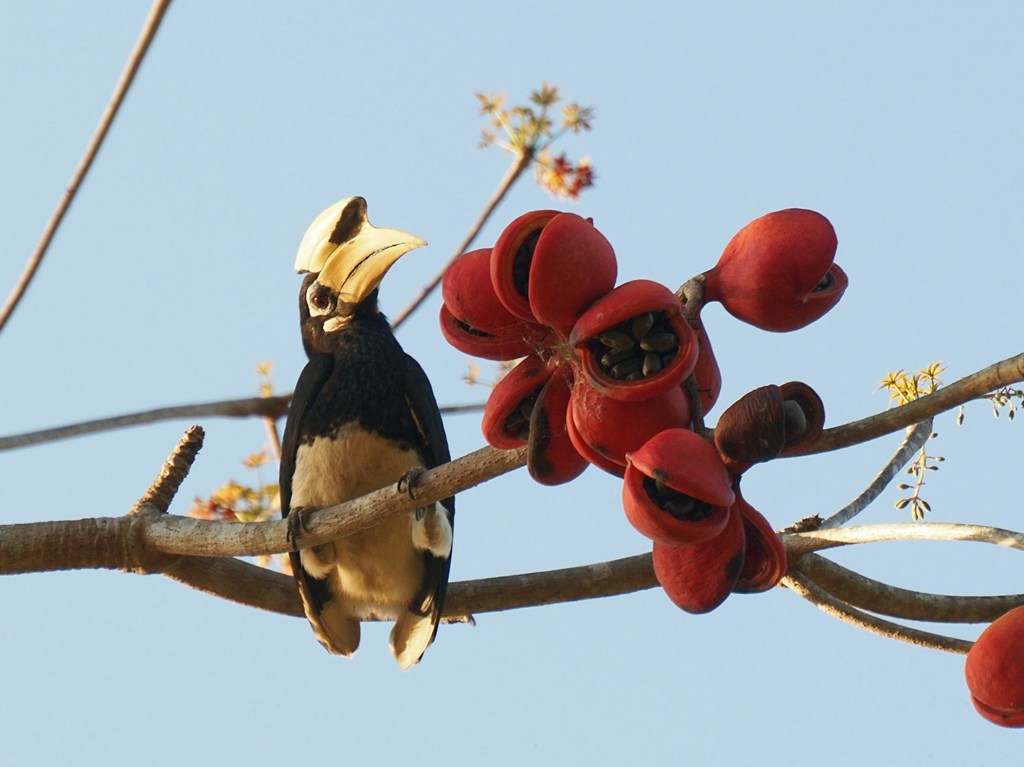
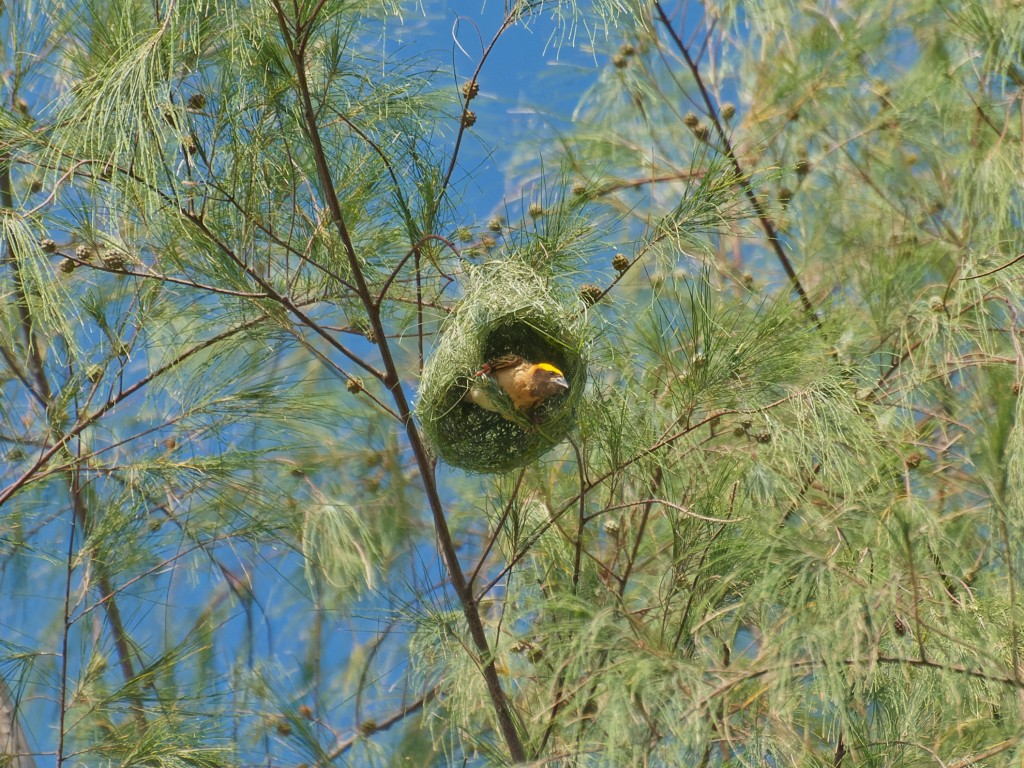
On the first day of our stay, I started noticing birds and wildlife easily from our hotel. I was stoked to notice noisy Baya Weavers carrying grasses back to weave their nests high in the trees above our bungalow. Sitting at the pool the next day I saw a gorgeous Kingfisher fly low and quick over the pool, its deep iridescent blue and orange plumage flashing in the sun. Another day I watched several Brahminy Kites (aka sea eagles) cruise the perimeter of the nearby paddy, and sometimes diving into the marsh grasses. But most exciting for me and Lindsay were a pair of hornbills, who swooped around the hotel trees, quirking and chattering to each other.
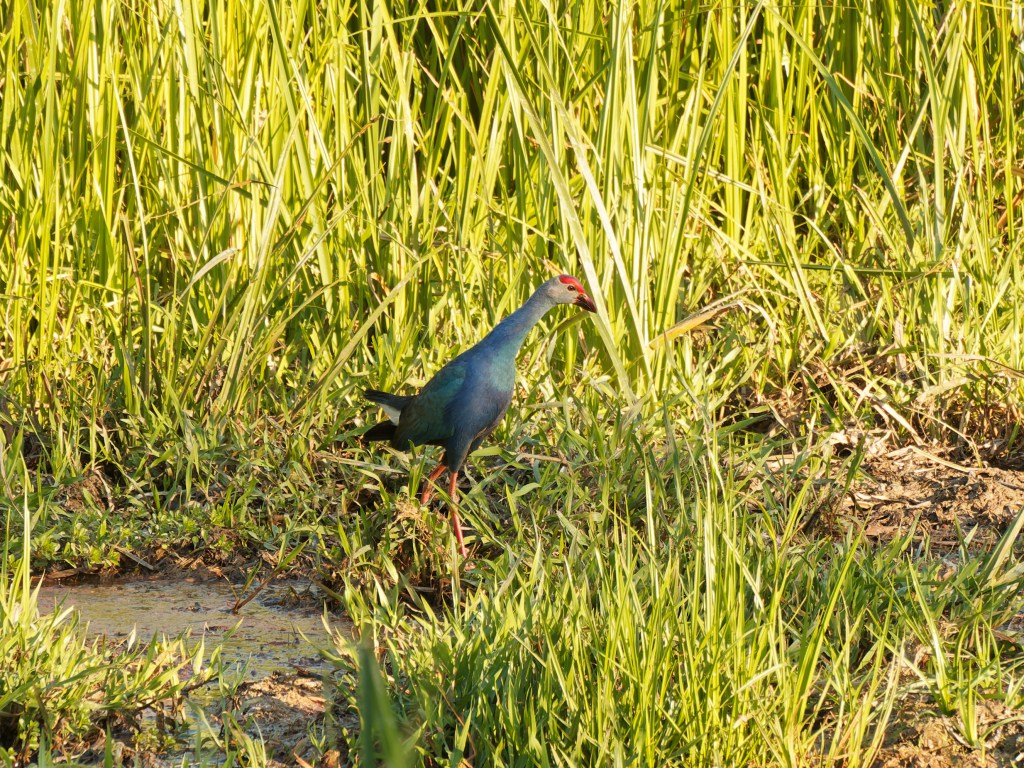
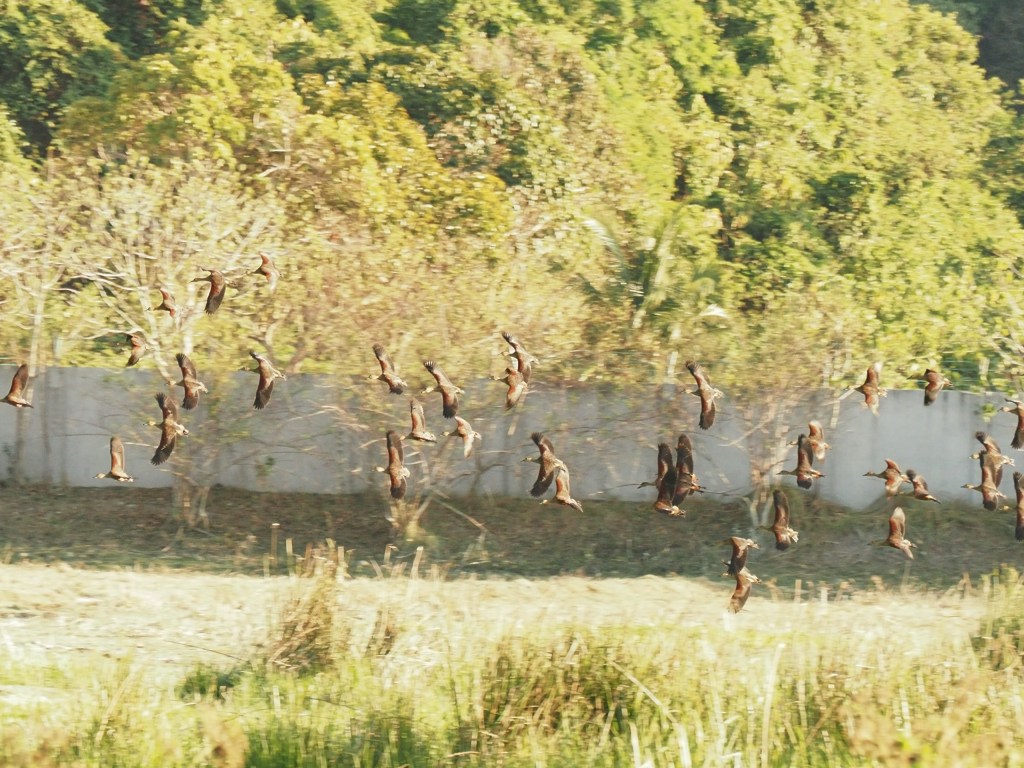
Our first evening at our hotel, I was happy to find a marsh and a large paddy field close by, with a road along 2 sides. So several mornings, and every evening I quietly walked the road to see and hear whatever I could. The marsh was bustling with activity with so many birds, frogs, fish, and insects. The paddy field was occupied with water buffalo, heron, and egrets.
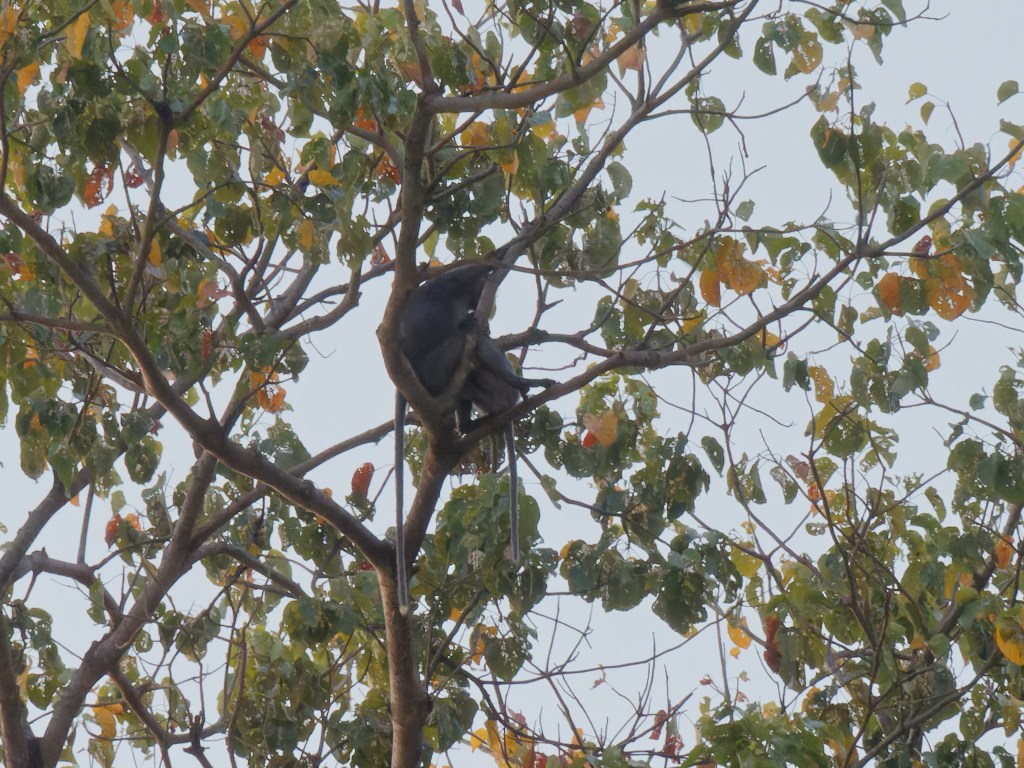
The road around the paddy and marsh held a mystery creature. Every evening, as I walked along, I could hear a definite movement in the trees, and quiet guttural sounds. I couldn’t recall exactly how I knew the sounds, but they were familiar, some kind of monkey. I could see trees sway and branches move, but the jungle was too dark and dense to spot anything definite. After I turned back the sounds and movement in the trees followed me for a while. One day something got just a few metres away before darting off.
On the last day of our visit, after my last evening wander, I was sitting with a very international crowd by the hotel pool. Suddenly I noticed a Russian man throwing rocks at the trees. Huh? Why would someone throw rocks at the trees?
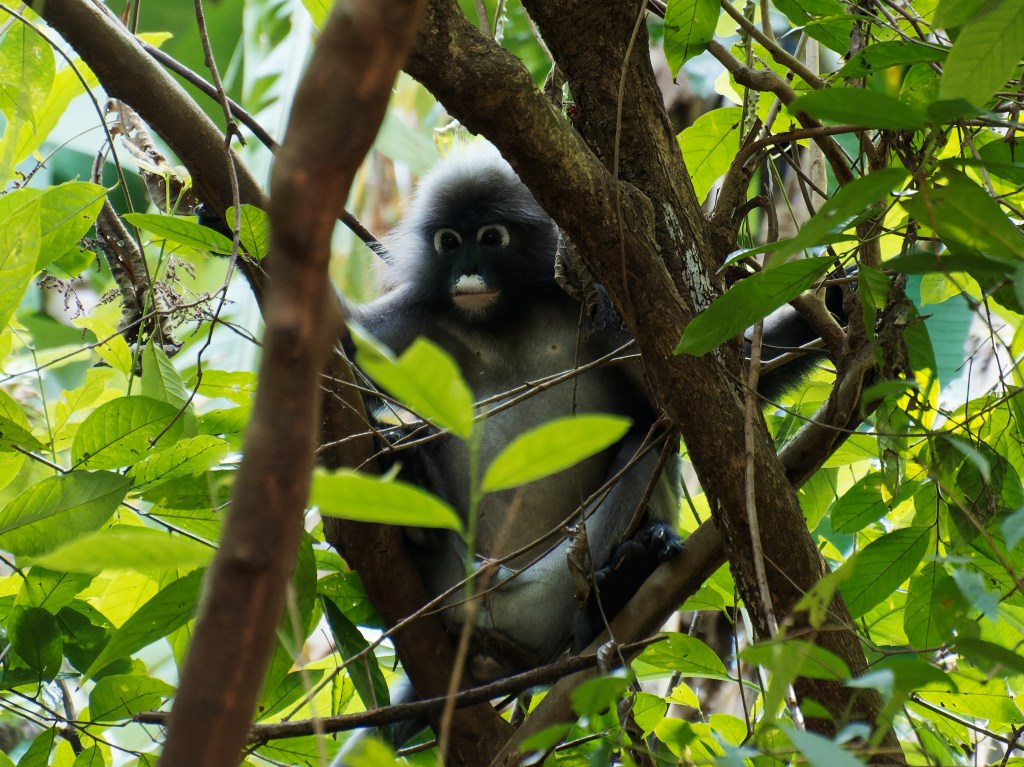
And there they were, well out of reach of the thrown rocks (ffs), a pair of Dusky Langurs. Not just a pair, but a mother and baby! Then I heard the sounds they made, the same quiet guttoral sounds from my evening walks. They remained several minutes, before they just…vanished. No sound, no moving branches, just gone. I realized then that they had made familiar sounds because we had watched a troupe of them a week before on Penang. I was elated to have my mystery solved, and to see these sort of secretive and endangered monkeys again.
Darulaman Wildlife Sanctuary
The host at our first hotel told us that a photographer for a birding magazine had stayed just a month before, and just within the area of the hotel he had identified 80 species of birds! I wasn’t so lucky, so I convinced Lindsay to visit the Darulaman Wildlife Sanctuary and do an early morning bird tour with a guide.
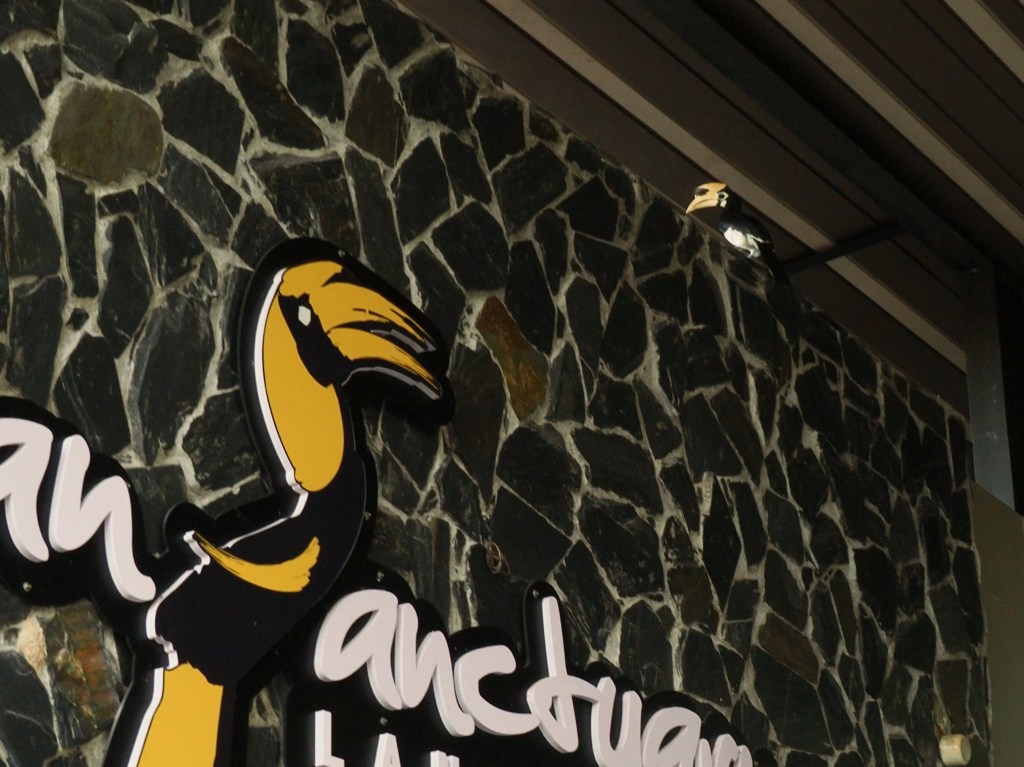
The walk took us a short way up into the Forest Preserve of Gunung Ray, then down via the public access area frequented by locals for picnics and river swims. Funny thing is, while inside the Sanctuary, it was hard to spot anything for all the dense foliage and high trees. Our guide would hear a bird, but we often couldn’t lay eyes on it. It was wonderful to start the day like that, but once we got to the public picnic area beside the sanctuary, we saw nearly everything we had hoped to, and some unexpected ones:
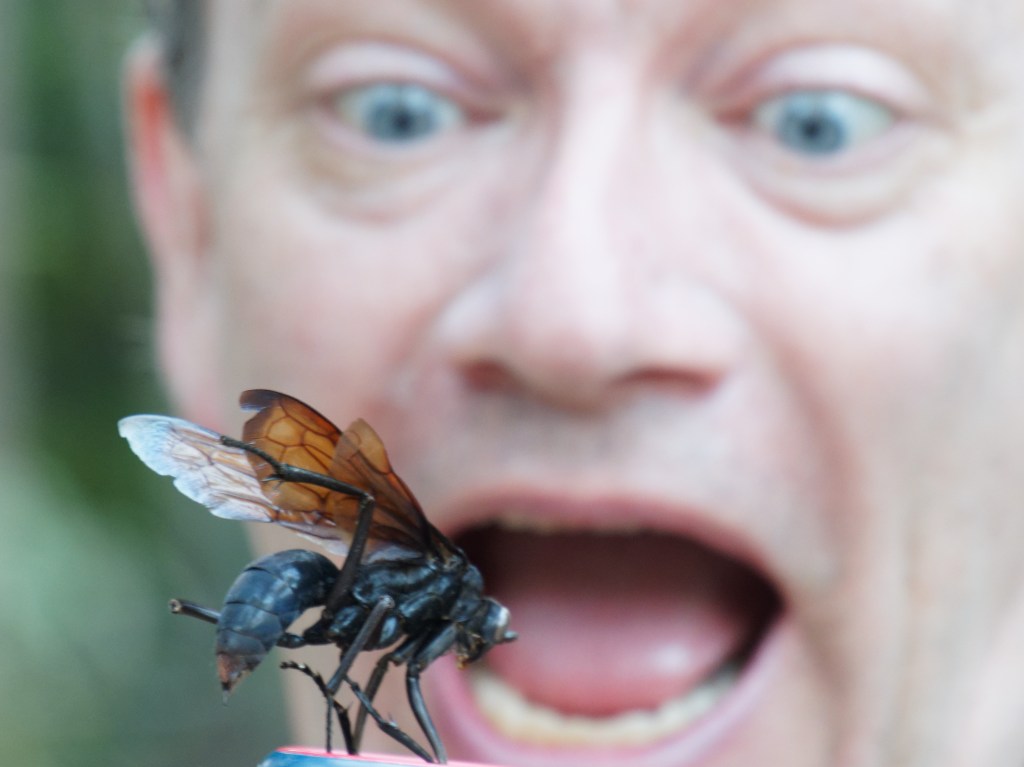
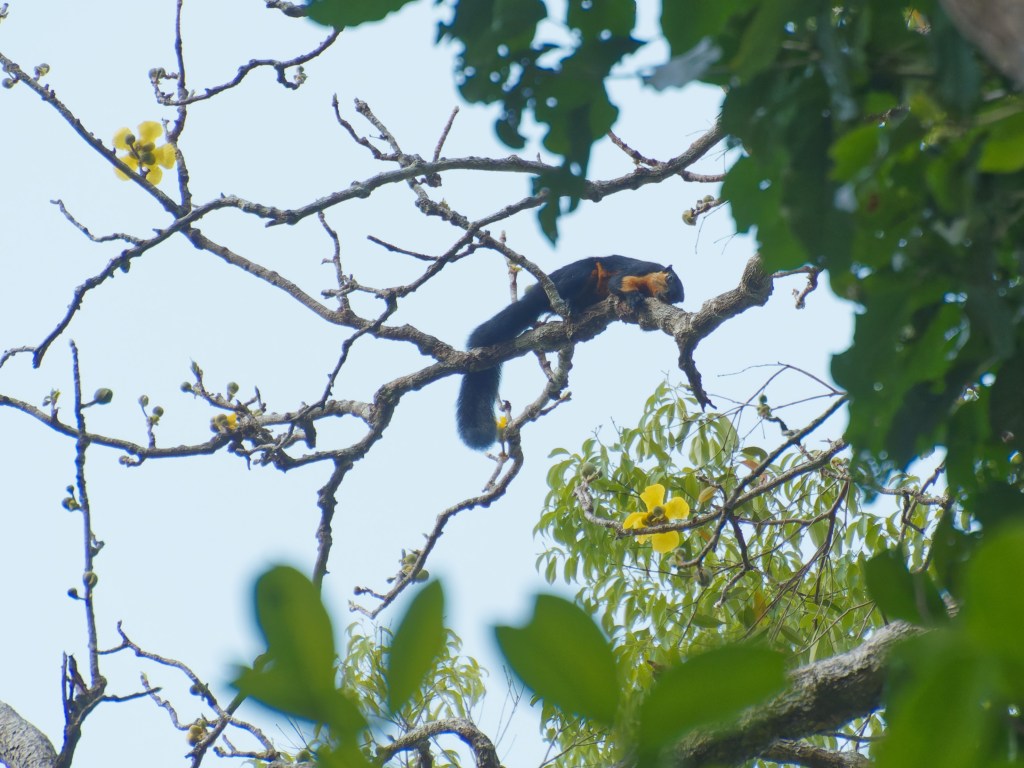
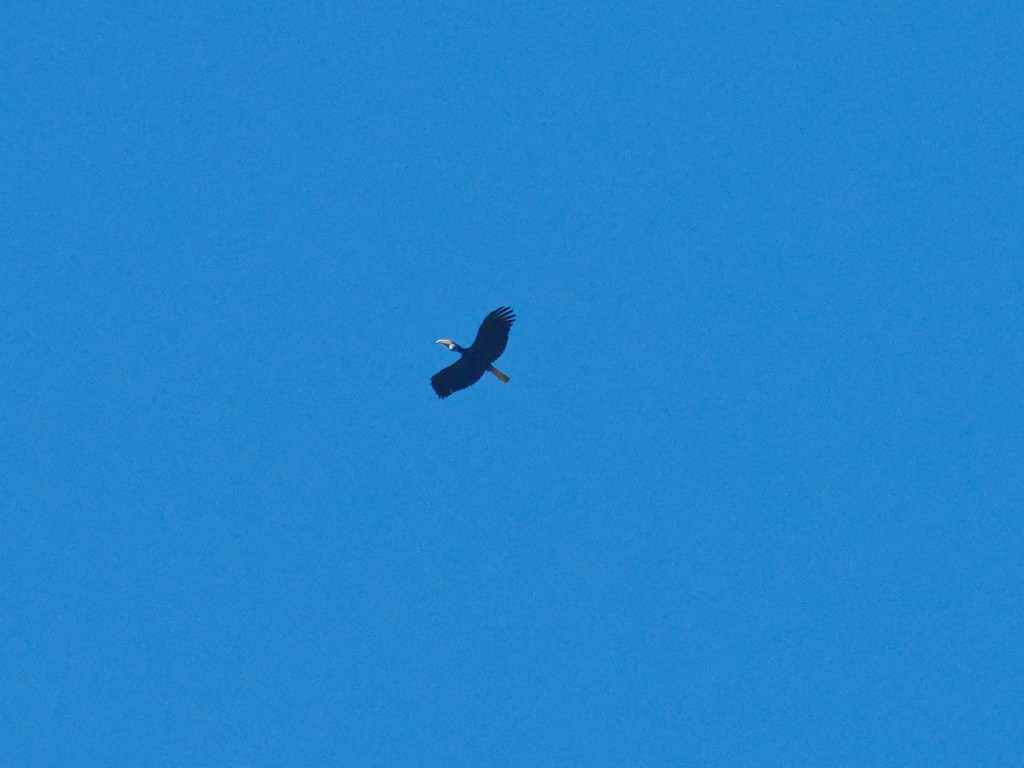
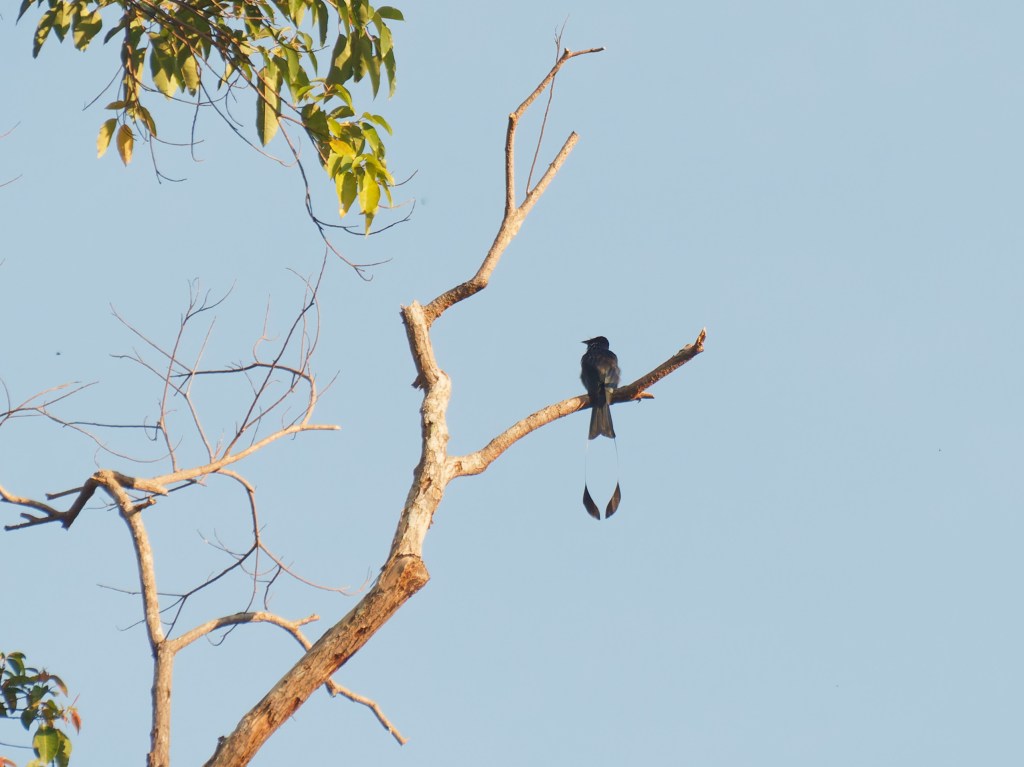
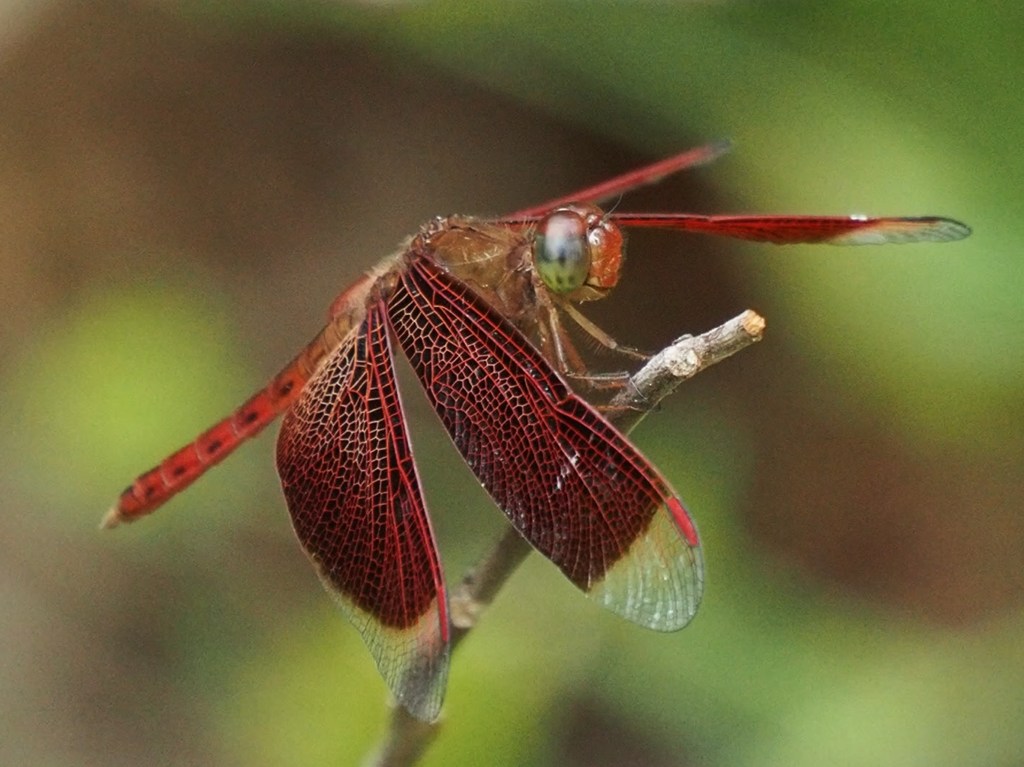
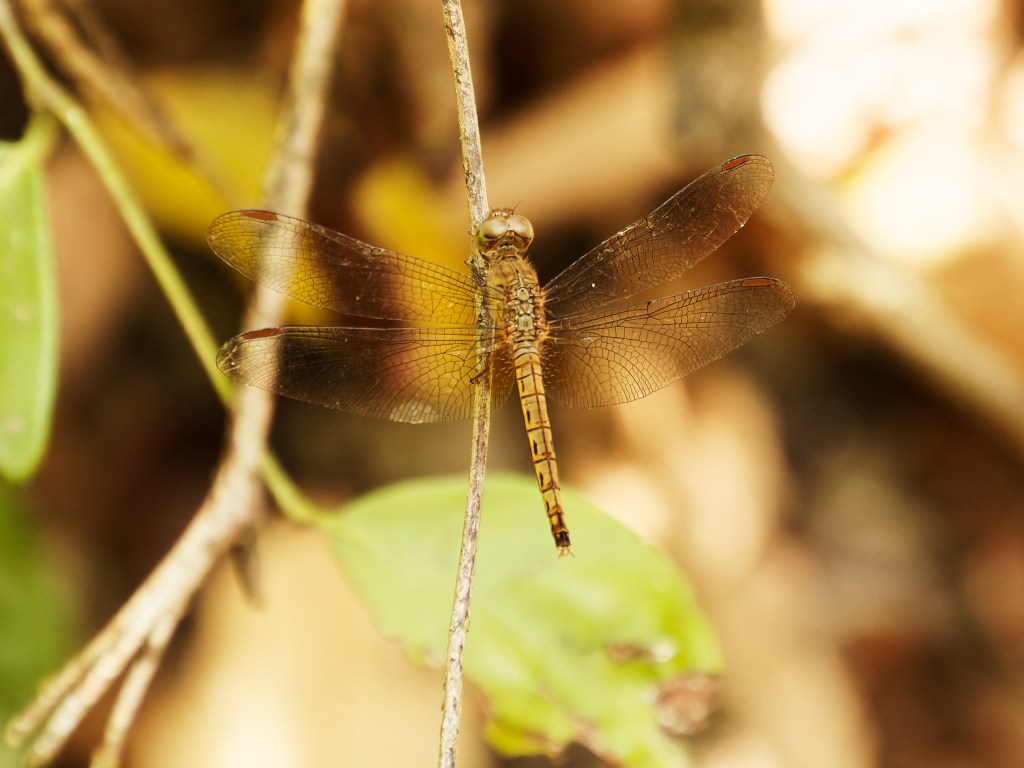
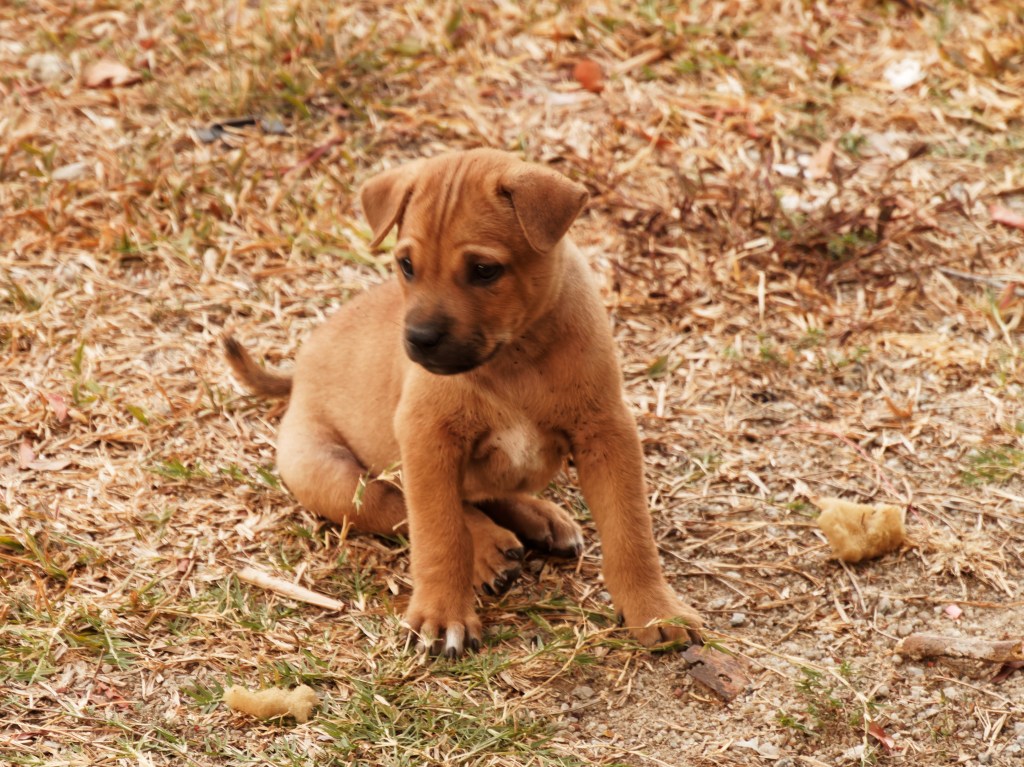
This is just a partial log of what we saw that day. Wagtail, bee eaters, macaque monkeys. And just for show, as Linday and I rode away, a wreathed hornbill swooped low across the road. We left there very happy.
The David Attenborough Moment
This, of course, is the point in the nature story when David would remind us that these amazing creatures are under threat. It’s true. Development in tourist areas on Langkawi does push as far as it can into natural areas, and continues today. Seemingly, there are no limits.
But there is a bit of a good-news story here: the marsh and paddy are part of a waste water treatment complex. The marsh and paddy are the outflow zones, carved out of the jungle. So in a way, this particular area might be considered a win for wildlife, or at least a lesser of evils, because there isn’t really a nearby place that combines hilly jungle terrain and wetland. I am grateful for what I witnessed there, and happy to see thriving wildlife.
I urge the leaders of Langkawi’s development make a sharp turn towards genuine shoreline and near-shore conservation for this island’s most vulnerable inhabitants.
The wildlife there are, after all, more unique, more irreplaceable, and most of all, far more Malaysian than literally anything near the tourist beaches, where the word “wild” more likely refers to human behaviour than to animals.
 Did It Anyway
Leave a comment