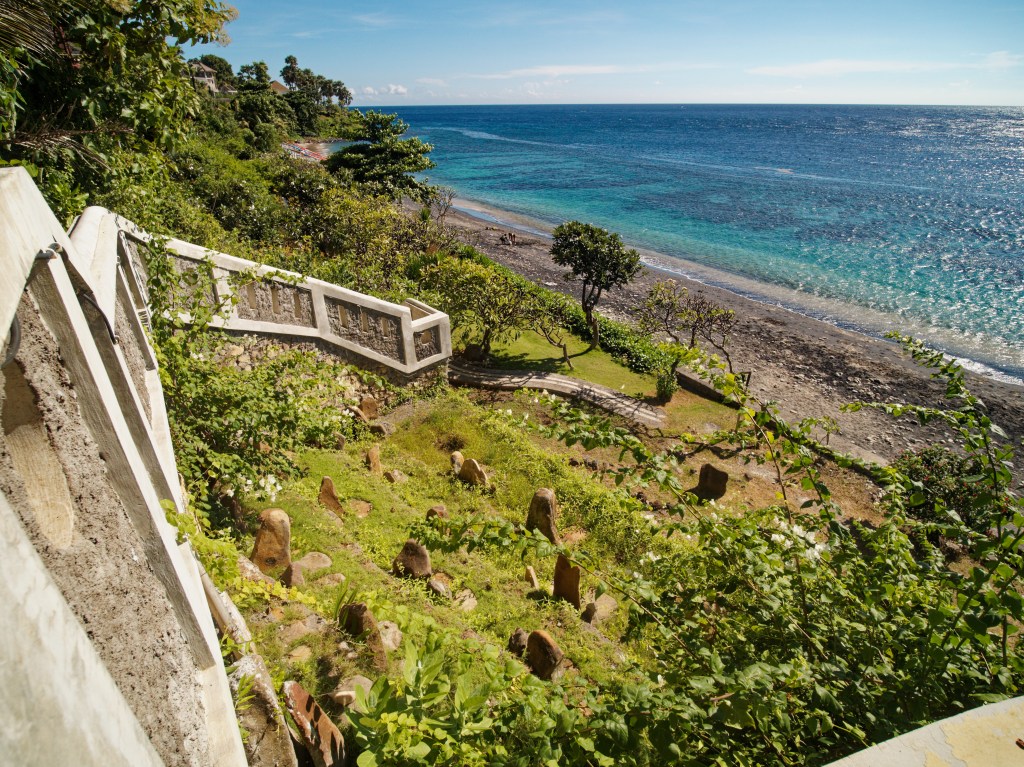
I had a realization today about our newest hotel: it surrounds a cemetery, and is on the way to a cremation site. It’s called Stairway to Heaven. Turns out the name is more than a reference to a popular song.
After taking in a gorgeous sunrise, I climbed up the stairs to the restaurant. I leaned over the wall and noticed a striking feature: the long stairway wraps around a green area, where stones are placed standing on end, beside each other on narrow terraces. “Hmm,” said my groggy mind, “those look like gravestones.” Only later, after coffee, did I put two and two together to realize that it was an old cemetery or memorial site. It makes sense, this area has been inhabited by fisherfolk for a long time. Soon the day would force me to contemplate how the Balinese handle death even more.

After breakfast – where we watched the groundskeepers start a new tree by cutting a branch and sticking it in the ground – we headed out to snorkel the reef just offshore. As I stumbled in the water, flailing around to pull on my fins, I heard some sounds of music, clanging, cheers, and drums. I looked up the hillside to see a giant black ox statue wobbling above the road. I yelled to Lindsay, having no ready vocabulary – “I’m going to see the bull in a procession!” and sprinted to change into Bali-acceptable clothing and grab my camera.
Truth is, I had seen the ox statue loaded onto a bamboo structure on the way to our hotel yesterday, so I knew something was up. But for it to pass by our hotel, this I could not miss! Was it some kind of party?
I ran up the stairs and at the road, found myself surrounded by a river of people in formal Balinese attire, walking – and sweating profusely – slowly moving down the steep road. They stopped a few times, and cheers arose from the crowd surrounding two huge objects being carried. I stood aside, up against a wall and tucked my camera as unobtrusively and respectfully as I could into the shadow. The stop-start of the procession, the sound of the music, the many cheers, the solemn and rowdy atmosphere amazed me. So instead of focusing on picture taking, I took a video instead, and tried to understand what was happening. The huge ox I had seen went by, then a very tall tower structure, pushed and stabilized by teams of men. One man wearing white was walking in front of, and tethered to, the teetering tower, waving a scythe in front of him. What was happening, what did it mean? I had heard that Bali has frequent Hindu ceremonies and parades, but I wasn’t expecting this size of event, especially so far south of little Amed.
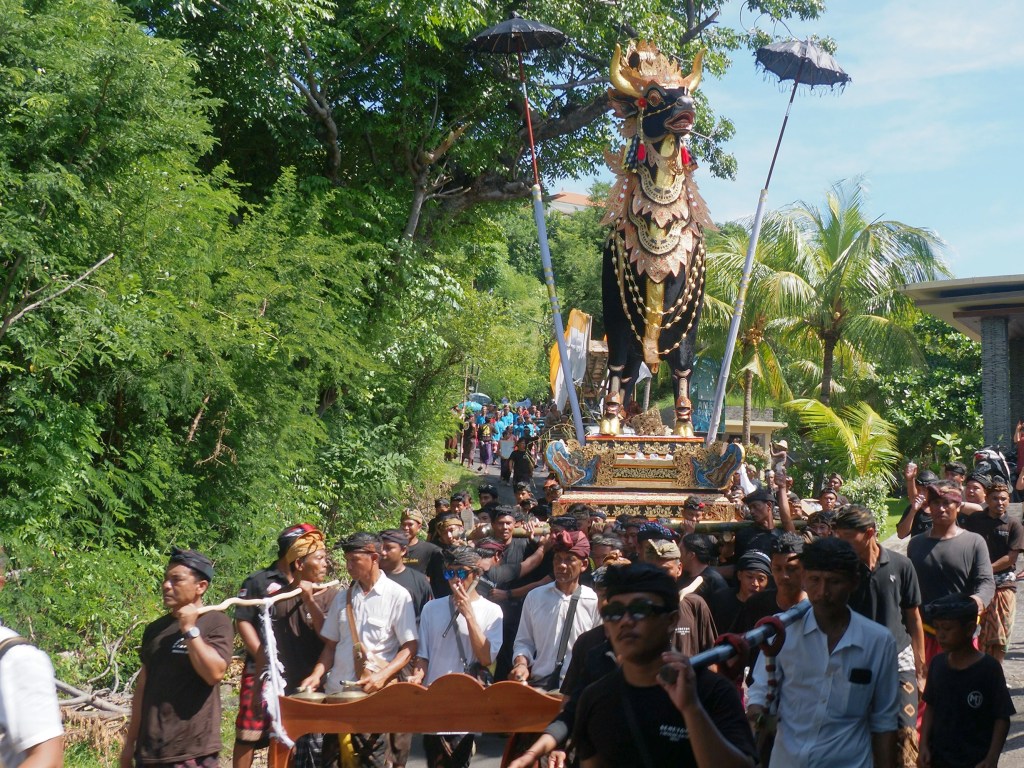
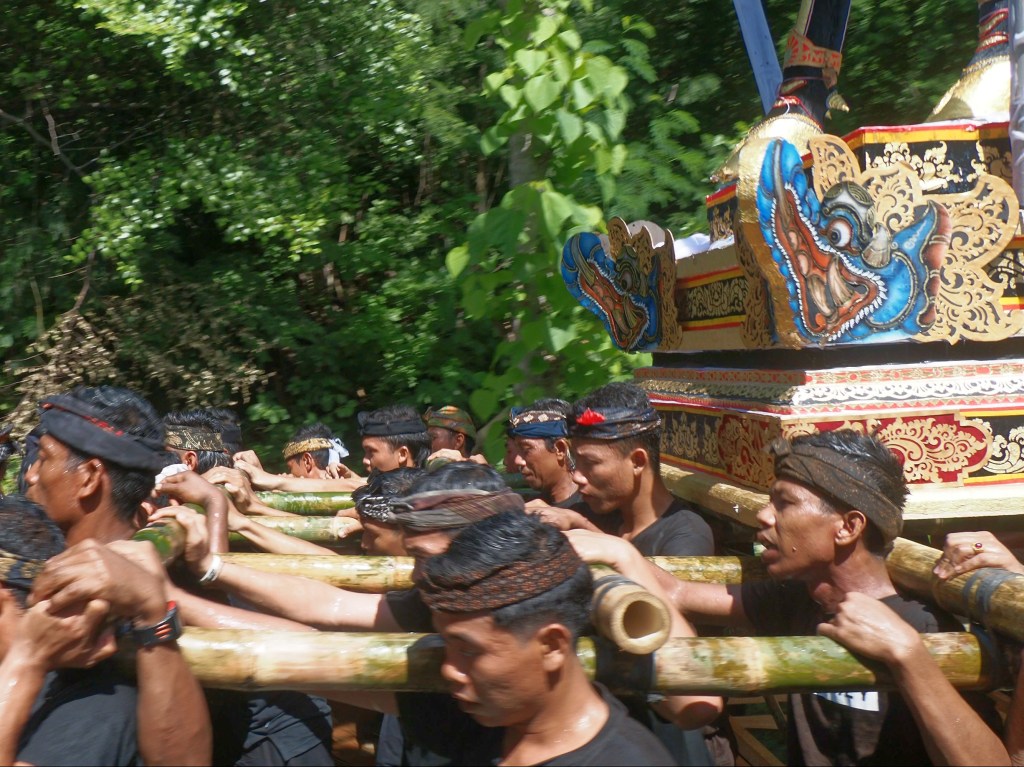
Later, when we went to lunch at the restaurant next door, the owners apologized for the lack of electricity, which was due to the procession that had passed by earlier. It was a cremation ceremony, our server told us. It was the kind a wealthy person has, and much more than she would have. For this procession, the power was turned off for safety reasons, and remained off for about 6 hours to give the participants time to reach the cremation place! Lindsay had also come running to see the event, and had learned from a bystander that the procession would go for 11 kilometres! In this 40+ degree C heat! Incredible.
Lindsay and I immediately did a quick internet dive, having peppered our hosts with far too many questions, and found out that we had witnessed a Ngaben. It’s a traditional Hindu Balinese funeral procession that ends with a cremation. The Ox figure is called a lembu, and the tower structure is called a wadah. The body is placed in one of them and burned once at the cremation site. For more information, check out the Wikipedia article here https://en.wikipedia.org/wiki/Ngaben. The idea is to get the deceased spirit properly launched past the evil lower realm, and up into the upper realm, to escape the rebirth cycle.
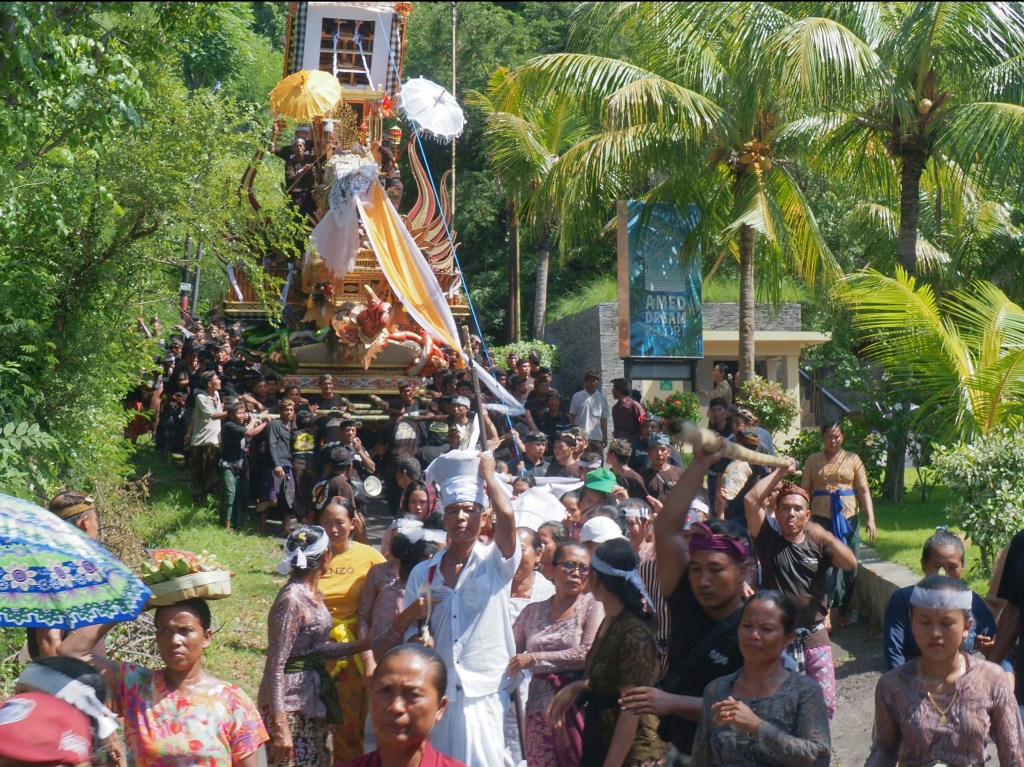
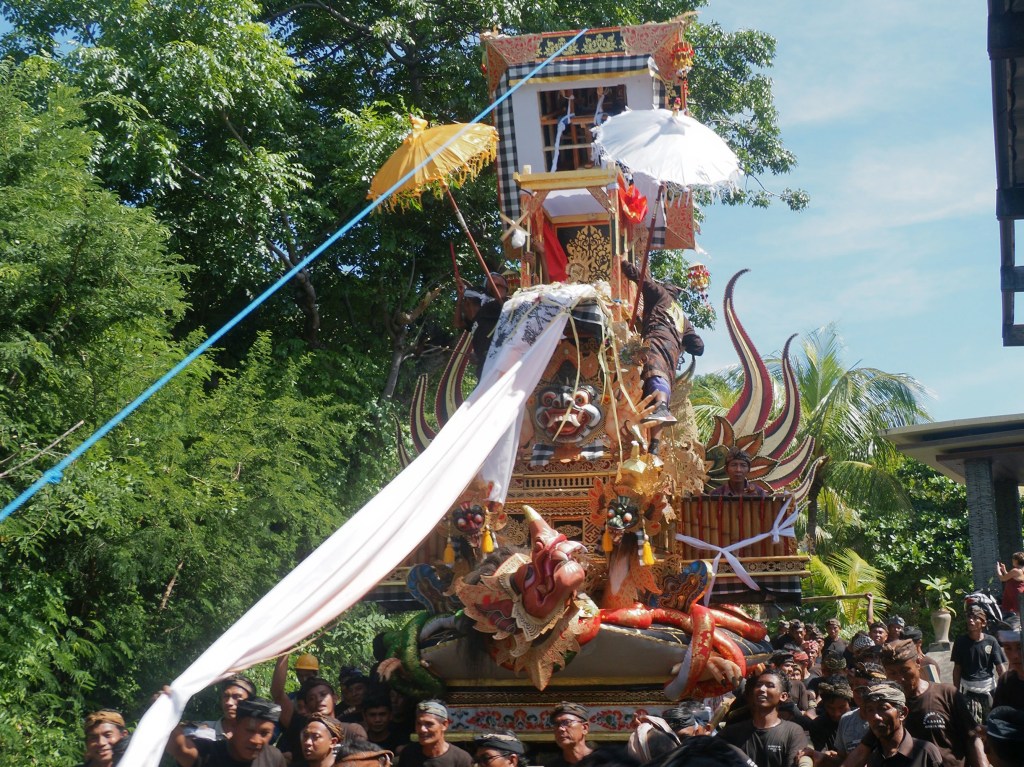
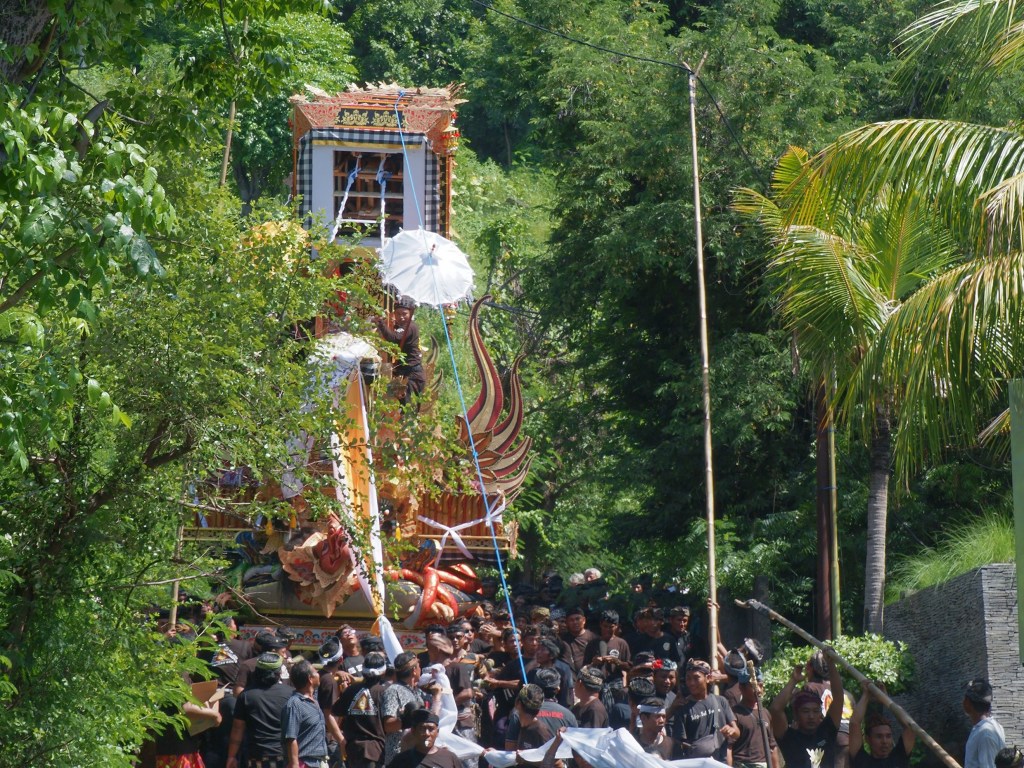
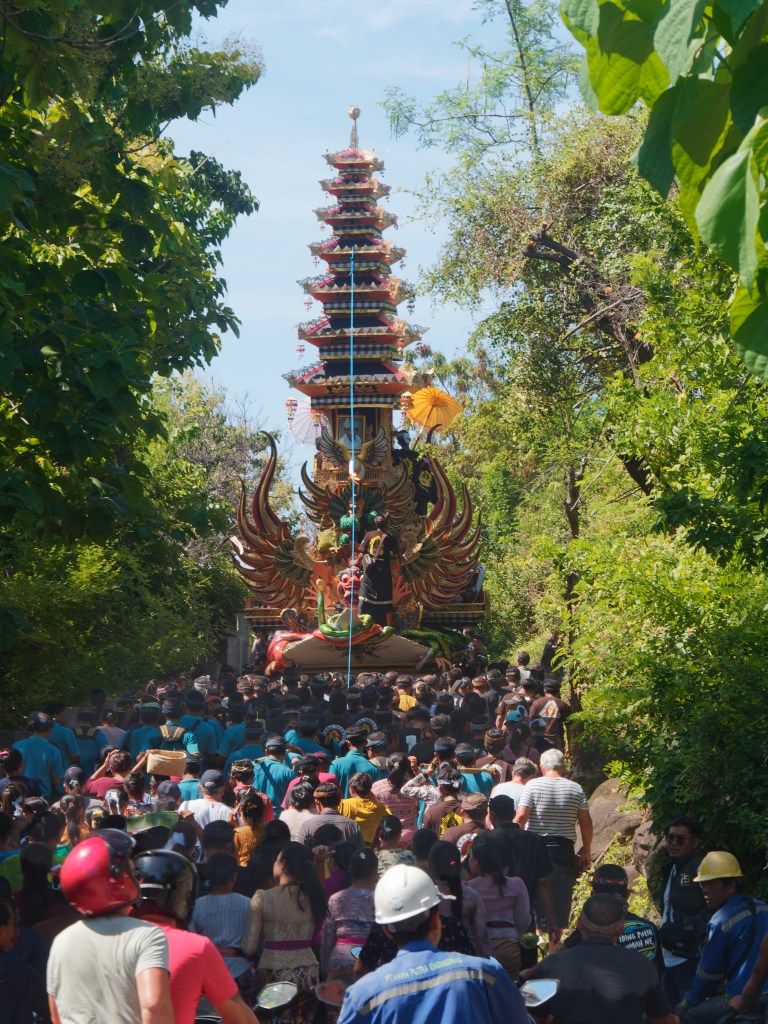
It was such an amazing thing to witness, involving so many people, so raucous, and elaborate in artistry and practical execution. I felt lucky to be included in a small way, in this community’s celebration of this person’s life and liberation of his spirit.
The day continued to amaze as we snorkeled the healthiest and most vibrant reef we’ve seen in a very, very long time. There were manta rays, sea snakes, flounder, and so many creatures new-to-us, and old friends from snorkel trips from many years ago.
I wonder now how I will remember this day, and how many more surprises Bali has in store.
 Did It Anyway
Leave a comment